
CODEX 2.2
Please make your selection from the above CODEX menu options for Episode 2.2
KEY-TEXT A
dē avō Marcī
Marcus Cilnius Maecēnās in Pompēiīs habitat. vīllam magnam habet in oppidō. vīlla tablīnum pulchrum habet. in tablīnō est imāgō avī. Marcus in tablīnō sedet, et cōgitat dē avō. avum amat, sed avum nōn videt.
Marcus librum habet; in librō est fābula dē Gāiō Cilniō Maecēnāte. Gāius Maecēnās est avus Marcī, sed Gāius Maecēnās mortuus est.
fābula in librō dīcit:
"Gāius Cilnius Maecēnās est amīcus prīncipis. prīnceps est Augustus. Gāius Maecēnās Vergilium et Horātium cognōscit; Vergilius et Horātius sunt poētae clārī. Gāius Maecēnās multam pecūniam habet. populus dīcit, 'Gāius Maecēnās lapidem dīvīnum habet. lapis dīvīnus pecūniam dat.' sed Gāius Maecēnās lapidem nōn habet. amīcum habet, sed amīcus est prīnceps, et prīnceps potentiam dat."
Visual Walkthrough
KEY-TEXT B
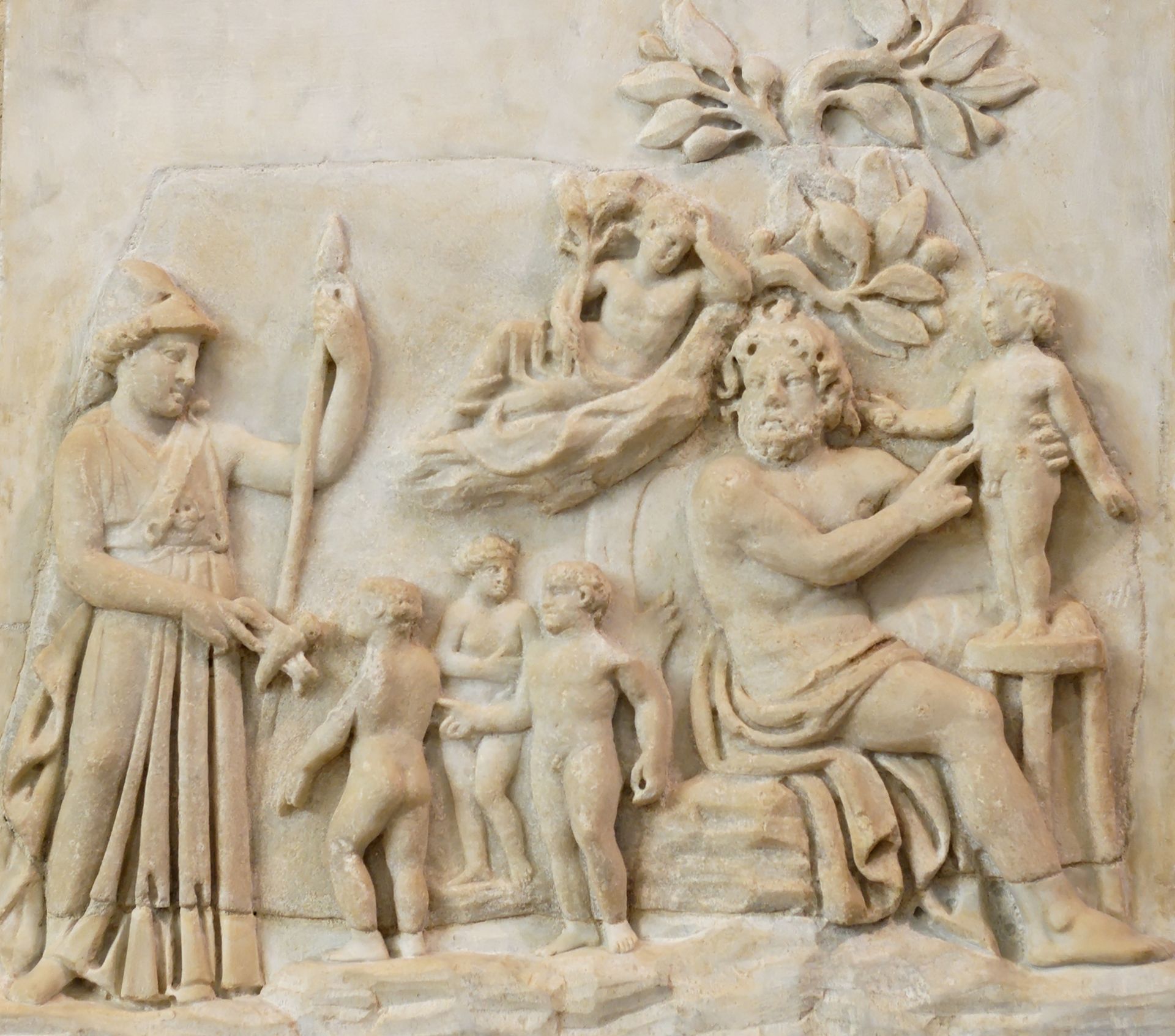
Ignis Promētheī
ōlim deī contrā Gigantēs bellum gessērunt. nunc Olympiī deī tōtum imperium habent. in terrā multa animālia vīvunt. hominēs quoque in terrā vīvunt, sed hominēs nōn sunt similēs animālibus. hominēs ad caelum spectant et deōs adorant.
hominēs animālia sacrificant sed saepe parvus cibus manet. Promētheus, fīlius Jāpetī, saepe ad hūmānōs spectat et eōs adiuvāre cupit. Promētheus tunc cōnsilium capit; Promētheus Jovem fallere cupit.
Promētheus sacrificium capit et dīvidit. ossa in sēbō pōnit sed carnem in coriō pōnit. tunc Jovem vocat et dīcit: "necesse est tibi ūnum sacrificium legere atque aliud sacrificium hūmānīs dare."
Juppiter dolum videt sed tamen ossa in sēbō legit. Juppiter dīcit: "Promētheus mē fallit! ita vērō, hominēs nunc carnem habent sed… poenam dat!"
Juppiter nunc est īrātus et Promētheus timet. Juppiter ignem ab hominibus aufert. hūmānī nunc frīgidī sunt neque cibum coquere possunt.
Promētheus iterum Jovem fallit; ignem in ferulā condit, ā caelō dēscendit, et ad hūmānōs flammās portat. hominēs iterum calōrem habent et nōn iam frīgidī sunt. hūmānī iterum cibum coquere possunt.
Juppiter iterum est īrātus. Juppiter nunc hūmānōs fallit et dōnum eīs dat…
Visual Walkthrough
Informational Text A
Gāius Cilnius Maecēnās

Gāius Cilnius Maecēnās nātus est circā annō 682 AUC (68 BCE). Maecēnās erat vir Rōmānus. Maecēnās erat dīves. Maecēnās multam pecūniam habēbat.
familia Maecēnātis erat antīqua familia Etrusca. familia Maecēnātis erat ex urbe Arrētiō. haec familia ōlim rēgia potēns fuit. Maecēnās erat eques Rōmānus. eques erat vir dīves, sed nōn erat senātor.
Maecēnās erat amīcus Octāviānī. Octāviānus posteā nōmen "Augustus" accēpit. Maecēnās Octāviānum in rēbus pūblicīs adiuvābat. Maecēnās multam potentiam habēbat, quod erat amīcus Octāviānī. ubi Octāviānus ab urbe aberat, Maecēnās Rōmam cūrābat.
Maecēnās māgnam vīllam in colle Esquilīnō habēbat. in vīllā hortī pulchrī erant. hortī Maecēnātis clārī erant. posteā, post mortem Maecēnātis, imperātor Tiberius in hāc vīllā habitāvit.
Maecēnās erat patrōnus. patrōnus est vir quī pecūniam artium amātōribus dat. Maecēnās pecūniam poētīs dabat. Maecēnās Vergiliō et Horātiō pecūniam dedit. Maecēnās Horātiō etiam fundum in montibus Sabīnīs dedit. fundus est terra et domus in agrīs.
Vergilius Geōrgica scrīpsit. Horātius Ōdās et Satirās scrīpsit. hī poētae māgnī et clārī erant.
Maecēnās quoque scrībere volēbat. Maecēnās et verba et carmina scrīpsit. sed Maecēnās nōn erat bonus scrīptor.
Maecēnās mortuus est annō 746 AUC (8 BCE). Maecēnās nūllōs līberōs habēbat. Maecēnās omnem pecūniam Augustō dedit.
hodiē nōmen "Maecēnās" significat "patrōnus artium."
Informational Text B
Introductiō ad Rēs Scrīptōriās Rōmānās
Rōmānī in multīs rēbus scrībunt. saepe Rōmānī in papȳrō scrībunt. papȳrus est herba. papȳrus ex Aegyptō venit. papȳrus est aspera. Rōmānī papȳrum in volūmine iungunt. tunc Rōmānī ātrāmentum in papȳrō pōnunt. ātrāmentum est ātrum.
Rōmānī in membrānā quoque scrībunt. membrāna nōn est herba. Rōmānī membrānam ex animālī faciunt. membrāna est tenuis. Rōmānī membrānam in cōdice iungunt. calamus ātrāmentum in papȳrō et in membrānā pōnit.
Rōmānī in tabulā quoque scrībunt. tabula cēram tenet. stylus est parvus et ferreus. stylus est ācer et hebes. stylus litteram in cērā scrībit et dēlet. tunc Rōmānus tabulam claudit. Rōmānus signum in cērā pōnit. signum est in ānulō. signum tabulam cēlat.
Rōmānī in mūrō quoque scrībunt. in mūrīs Pompēiānīs sunt multae scrīptiōnēs. Rōmānus saepe ōllam frangit. tunc Rōmānus in ōllā scrībit. hodiē multae scrīptiōnēs manent. homō scrīptiōnem in mūrō et in ōllā legit. ita Rōmānī antīquī ad nōs verbum mittunt.
Text originally written by Sean Minion; revised 2026.
GRAMMATICA
-s
Operative, you may have noticed that every verb you have met so far has been a third-person verb: it tells what he or she or it does, like Marcus sedet, "Marcus sits." You have now met a verb of a different kind. When Sextus asks you quaestiōnēsne habēs?, "do you have questions?", the ending -s on habēs tells you the subject is you. (You meet the same ending in the VERBA entry quid agis?, "what are you doing?")
This is worth pausing on. In English we need a separate word, "you," to name who is acting. Latin can carry that information inside the verb itself: habēs already means "you have," with no other word required. The ending does the work the English pronoun does.
-ō
Now meet the speaker's own ending. When Sextus says volūmen dēsīderō, "I want the scroll," the ending -ō tells you the subject is I. So a single Latin verb can name three different people by its ending alone:
- parāt, "he/she prepares" (the -t you already know)
- parās, "you prepare" (the new -s)
- parō, "I prepare" (the new -ō)
The Demiurge offers one scene to fix the difference. Picture the same dinner described by three speakers:
- Caecilius, of the cook: coquus cēnam parāt. "The cook prepares dinner."
- Caecilius, to the cook: tū cēnam parās. "You prepare dinner."
- the cook, of himself: ego cēnam parō. "I prepare dinner."
You will sometimes see the little words ego ("I") and tū ("you") standing beside these verbs, as in ego cēnam parō. Because the ending already names the person, Latin does not need them; a writer adds them only for emphasis, much as you might lean on the word in "I prepare dinner." These are the personal pronouns in the nominative, the case of the subject.
You have also met this pronoun "you" doing other jobs, where it changes shape: in Sextus tē spectat, "Sextus watches you," the form tē is "you" as the object. For now it is enough to recognize tē (and tibi, "to you") as the same pronoun in a different role. You are not asked to produce these forms yet.
For a fuller view of the singular present endings, review this video briefing from latintutorial.com:
VERBA
| Latin | English | Part of Speech |
| habet | she/he has | verb |
| nunc | now | adverb |
| sed | but | conjunction |
| ubi | where, when | adverb |
| via | road, way | noun |
CULTURALIA
Patronage and the Making of Roman Literature
Operative, you have just read of a man, Gāius Cilnius Maecēnās, who gave money to poets. That was not simply private generosity. It was one of the central institutions of Roman society, and grasping it will sharpen every literary mission ahead of you.
Romans organized much of their social and political life around the bond between a patrōnus (patron) and his clientēs (clients, dependents). A patron was a man of wealth and standing who offered protection, money, legal help, and influence; in return his clients gave him their loyalty, their public support, and the visible prestige of a large following. The bond ran in both directions and carried real obligations on each side. You will see how it was enacted, day by day, inside a great house when you go deeper into one; for now, hold on to the idea of the exchange.
When that same bond was turned toward the arts, it produced what we call literary patronage. A poet in Rome could rarely live by selling his work: there was no system of royalties, and every copy was written out slowly by hand. A poet needed a patron to house him, feed him, and free him to write. In exchange, the patron's name lived on inside the poetry, and his reputation rose with the poet's fame.
This is why the name Maecēnās still means "a generous patron of the arts" two thousand years later. The poets of his circle, above all Vergil and Horace, composed some of the most admired Latin ever written, and they composed it with his support. Much of the literature you will study in this operation survives because a patron once judged it worth paying for. When you handle a volūmen written in such a circle, you hold the product of this exchange.
You may wish to consider this short documentary courtesy of Kings and Generals on YouTube about Roman patronage:
For how such a scroll was actually made and written, see the informational text on Roman writing materials.
ATTUNEMENT
Attunement, Episode 2.2
Preview each exercise, then copy it into your own Google Drive to complete it.
2.2.a - Sort the Verbs by Person
sort · 12 forms2.2.b - Match the Ending to the Subject
forced-choice · 6 items2.2.c - dē avō Marcī: Comprehension
comprehension · 6 questions (Latin)2.2.d - Ignis Promētheī: Comprehension
comprehension · 6 questions2.2.e - Roman Writing Materials: Comprehension
comprehension · 6 questions2.2.f - Patronage Then and Now
compare-contrast · 4 rowsMemorātiō
reflect · recall your pathBefore you move on, set down this chapter of the story in your own words. You woke in Sextus's house with the Titanomachy still ringing in your head; what did Sextus say your own Fābula had revealed about where the Lapis went? He has handed you a task and a riddle, the initium of a lost scroll. Whose scroll is it, who holds it now, and how are the two men named Maecēnās connected? What is your plan for reaching the villa unseen, and what advantage does your tie to Caecilius give you?
Operations like this one run for months, and the thread of the story is easy to lose. A few notes now, while the riddle is fresh, are how you keep hold of it.
